Understanding Flood Zones in Florida: What Buyers and Sellers Need to Know
Living in Florida comes with plenty of perks—beautiful weather, waterfront living, and year-round outdoor lifestyle. But it also comes with an important factor every homeowner and buyer needs to understand: flood zones.
Flood zones play a major role in insurance costs, lending requirements, and long-term property value. Whether you're buying, selling, or just curious, here’s a breakdown of what flood zones mean in Florida and how they impact you.
What Are Flood Zones?
Flood zones are geographic areas defined by the Federal Emergency Management Agency (FEMA) that indicate the level of flood risk for a property.
These zones are shown on Flood Insurance Rate Maps (FIRMs) and are used by lenders and insurance companies to determine flood insurance requirements.
The Main Flood Zones in Florida
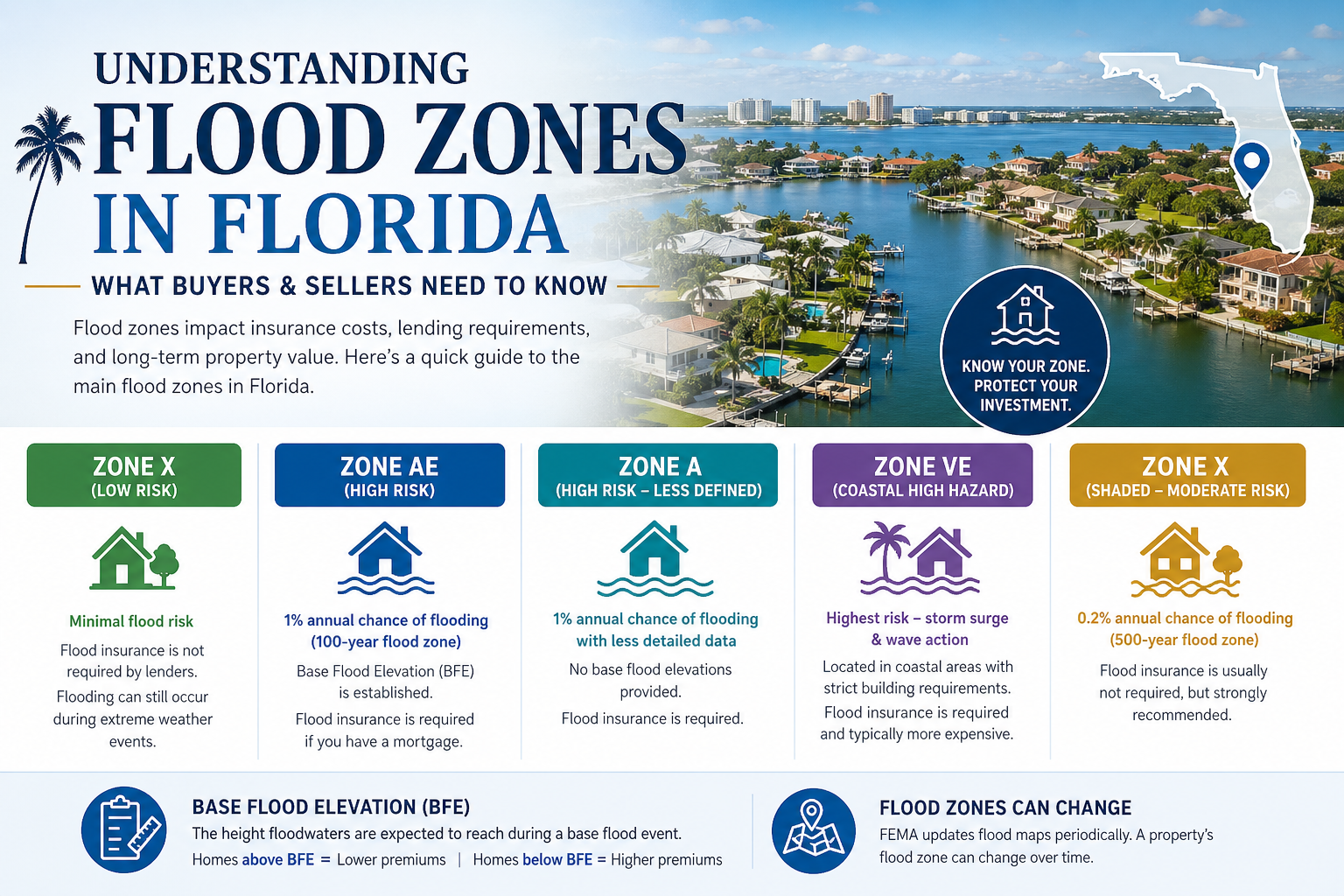
Zone X (Low Risk)
Best-case scenario for homeowners
- Minimal flood risk
- Flood insurance is not required by lenders
- Typically the most desirable zone for buyers
Important note:
Even though it’s considered low risk, flooding can still occur due to heavy rain, hurricanes, or drainage issues.
Zone AE (High Risk)
Most common high-risk flood zone
- 1% annual chance of flooding (often called the “100-year flood zone”)
- Base Flood Elevation (BFE) is established
- Flood insurance is required if you have a mortgage
What this means:
Your home’s elevation relative to the BFE will directly impact your insurance premium.
Zone A (High Risk, Less Defined)
Similar risk to AE, but with less data
- Also a 1% annual flood risk
- No detailed elevation data provided
- Flood insurance is required
These areas can sometimes carry more uncertainty, which may affect insurance pricing.
Zone VE (Coastal High Hazard)
Highest risk category in Florida
- Located in coastal areas exposed to storm surge and wave action
- Strict building requirements
- Flood insurance is required—and typically more expensive
This is common along barrier islands and beachfront communities.
Zone X (Shaded) – Moderate Risk
Between low and high risk
- 0.2% annual chance of flooding (500-year flood zone)
- Flood insurance is usually not required, but strongly recommended
What Is Base Flood Elevation (BFE)?
Base Flood Elevation is the height floodwaters are expected to reach during a base flood event.
- Homes above BFE → Lower insurance premiums
- Homes below BFE → Higher insurance premiums
In areas like Sarasota and Manatee County, even a few inches can make a big difference in cost.
Why Flood Zones Matter for Buyers
If you're buying a home in Florida:
- Flood insurance can add hundreds to thousands per year
- It affects your monthly payment and affordability
- It can influence resale value
A home in Zone X may be more attractive than a similar home in Zone AE purely due to insurance costs.
Why Flood Zones Matter for Sellers
If you're selling:
- Buyers are more educated than ever about flood risks
- Insurance quotes can make or break a deal
- Providing an elevation certificate (if available) can be a huge advantage
Can Flood Zones Change?
Yes—they absolutely can.
FEMA periodically updates maps based on new data, development, and environmental changes. A property can be rezoned into a higher or lower risk category over time.
Final Thoughts
Flood zones aren’t something to fear—but they are something to understand.
The key is knowing:
- What zone the property is in
- What insurance will cost
- How it impacts your long-term investment
If you’re buying or selling in the Sarasota or Manatee County area, having a knowledgeable real estate professional guide you through flood zone implications can save you both money and stress.
Need Help Navigating Flood Zones?
If you have questions about a specific property, flood insurance estimates, or how flood zones impact your buying or selling strategy, feel free to reach out. I’m here to help you make confident, informed decisions in the Florida market.
March 23, 2026
🏡 Conventional vs. FHA Loans in Florida: What Buyers & Sellers Need to Know
If you’re buying or selling a home in Florida, one of the biggest decisions (and potential deal-makers or breakers) is the type of financing involved.
Two of the most common loan types are FHA loans and Conventional loans—and each comes with very different advantages depending on your situation.
Let’s break it down in a simple, real-world way so you can make the best decision in today’s Florida market.
🔍 What’s the Difference?
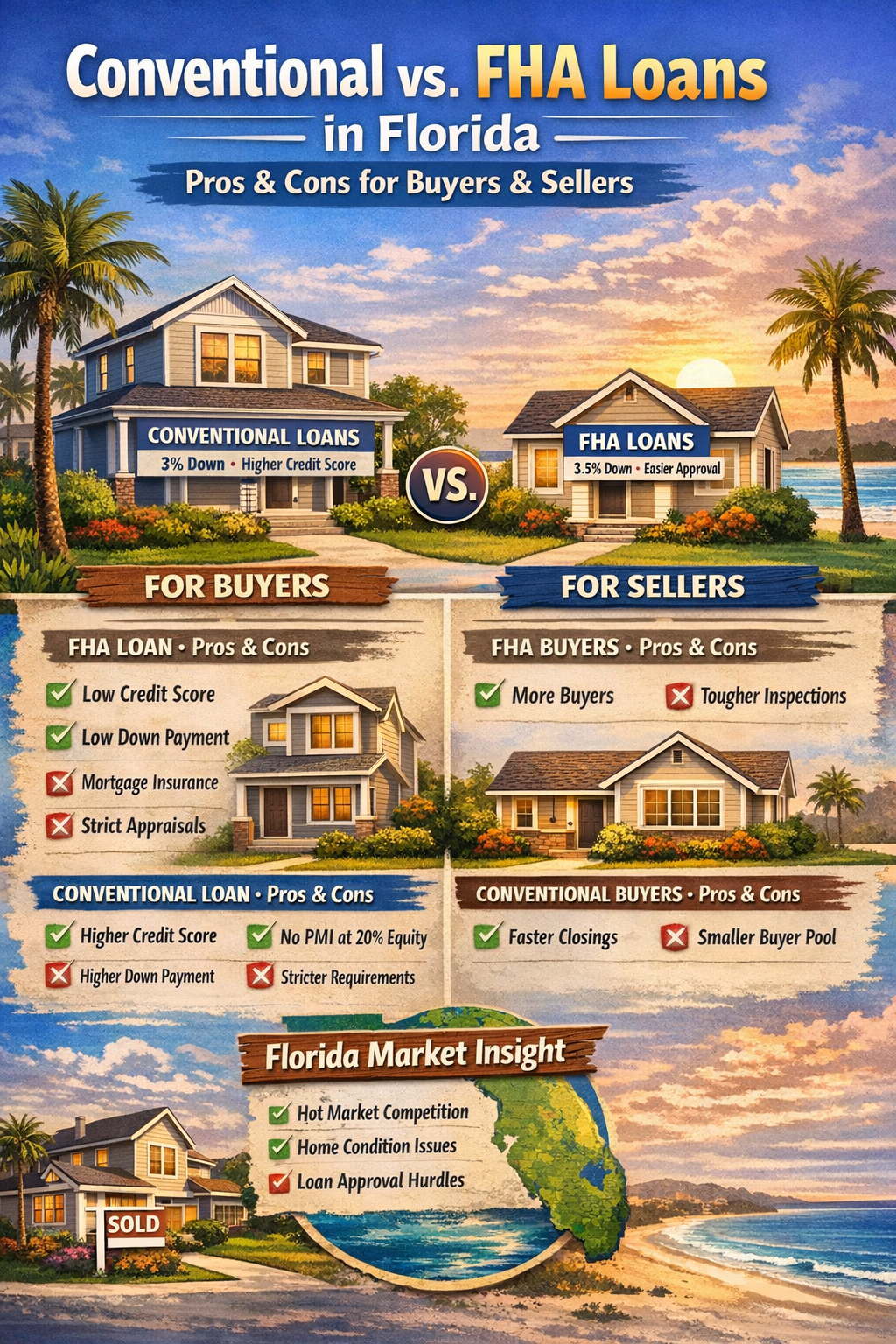
FHA Loans (Federal Housing Administration)
- Government-backed loans designed to help more buyers qualify
- As little as 3.5% down payment
- More flexible credit requirements (scores as low as ~580)
Conventional Loans
- Not government-backed (offered by private lenders)
- As little as 3% down for qualified buyers
- Typically require higher credit scores (620+)
👉 In short:
- FHA = easier to qualify
- Conventional = stronger long-term financial benefits
🧑💼 Pros & Cons for BUYERS
✅ FHA Loan Pros (Great for First-Time Buyers)
- Lower credit score requirements
- Lower upfront cash needed
- Higher debt-to-income ratios allowed (more flexibility)
- Seller can contribute up to 6% toward closing costs
❌ FHA Loan Cons
- Mortgage insurance (MIP) is required, often for the life of the loan
- Stricter appraisal and property condition requirements
- Lower loan limits in some Florida markets
- Can be less competitive in multiple-offer situations
✅ Conventional Loan Pros
- Lower long-term cost for strong borrowers
- PMI (mortgage insurance) can be removed at 20% equity
- More flexibility (second homes, investment properties)
- Stronger offer when competing in Florida’s hot market
❌ Conventional Loan Cons
- Higher credit score requirements
- May require more cash upfront
- Stricter debt-to-income limits
🏠 Pros & Cons for SELLERS
This is where things get really important—because loan type can impact your deal.
✅ Accepting FHA Buyers (Pros)
- Opens your home to a larger pool of buyers
- Great for entry-level and mid-range homes
- Buyers are often highly motivated
❌ FHA Buyers (Cons)
- FHA appraisal is more strict (repairs may be required)
- Potential delays if the property doesn’t meet FHA standards
- Loan limits may restrict higher-priced homes
👉 Example in Florida:
Things like roof condition, peeling paint, or safety issues can become negotiation points.
✅ Accepting Conventional Buyers (Pros)
- Fewer appraisal issues
- Faster, smoother closings
- Stronger financial qualifications
- Often more competitive offers (especially in multiple-offer scenarios)
❌ Conventional Buyers (Cons)
- Smaller buyer pool compared to FHA
- Some buyers may request concessions instead of repairs
🌴 Florida Market Insight (This Matters!)
In competitive areas like Sarasota, Lakewood Ranch, and Parrish:
- Conventional loans often win in bidding wars
- FHA loans are more common in affordable price ranges
- Insurance, roof condition, and property age play a HUGE role in loan approval
Because Florida homes must pass insurance and inspection hurdles, FHA deals can sometimes face extra scrutiny.
💡 Which Loan Is Better?
There’s no one-size-fits-all answer:
👉 FHA might be best if:
- You’re a first-time buyer
- Lower credit score
- Limited savings
👉 Conventional might be best if:
- You have strong credit
- You want lower long-term costs
- You’re competing in a hot market
🏁 Final Thoughts
Choosing between FHA and Conventional financing isn’t just about qualifying—it’s about strategy.
- Buyers: It impacts your monthly payment and long-term wealth
- Sellers: It impacts how smooth (or stressful) your transaction is
In today’s Florida market, understanding this difference can literally save—or make—you thousands.
📲 Thinking About Buying or Selling?
If you’re navigating the Sarasota or Manatee County market, I’d be happy to help you:
- Compare loan scenarios
- Connect you with trusted lenders
- Structure your offer (or listing) for success
Let’s build a game plan that works for YOU.
March 18, 2026
If you're considering buying a home in Bradenton, FL, you've probably noticed a surge in new construction communities. From modern layouts to builder incentives, new builds can be incredibly appealing—but are they the right choice for you?
In this guide, we’ll break down the pros, cons, and key factors to help you decide whether a new construction home in Bradenton is truly worth it.
1️⃣ The Benefits of Buying New Construction in Bradenton
One of the biggest advantages of new construction homes is that everything is brand new—meaning less maintenance, modern design, and better efficiency.
What buyers love:
-
Modern layouts & customization: Open floor plans, smart home features, and the ability to choose finishes if you buy early in the process
-
Energy efficiency & updated building codes: New homes in Florida are built to stricter standards for wind resistance and insulation, which can improve safety and reduce utility costs
-
Lower maintenance costs: With new systems, roofs, and appliances, you’re less likely to face major repairs in the first few years
-
Builder incentives: Many builders in the Bradenton area are offering perks like closing cost assistance or rate buy-downs to attract buyers
👉 Local insight: Bradenton’s continued growth and available land make it a hotspot for new developments, giving buyers more options than in many other Florida markets
2️⃣ The Potential Downsides to Consider
While new construction has its perks, it’s not always the perfect fit for every buyer.
Things to watch for:
-
Higher upfront cost: New homes often come at a premium compared to resale properties on a price-per-square-foot basis
-
Additional costs: HOA fees, upgrades, and landscaping can add up quickly
-
Location trade-offs: Many new communities are in developing areas, which may mean longer commutes or fewer nearby amenities (at least initially)
-
Construction timelines: Delays can happen, which may impact your move-in plans
-
Insurance & building costs: In coastal areas like Bradenton, hurricane-resistant construction and flood zone requirements can increase costs, but are necessary for long-term protection
👉 Pro tip: Always look beyond the base price—upgrades and monthly costs can significantly impact your budget.
3️⃣ New Construction vs. Resale: Which Is Better in Bradenton?
This is where your personal goals really matter.
New construction may be right for you if:
-
You want a move-in ready home with modern finishes
-
You prefer low maintenance and fewer repairs
-
You like the idea of community amenities (pools, walking trails, etc.)
-
You can be flexible with timing
Resale may be better if:
👉 In today’s market, new construction is becoming increasingly competitive due to builder incentives, making it a strong option for many buyers in the Bradenton area
Conclusion: Is New Construction Worth It in Bradenton, FL?
The short answer? It depends on your priorities.
New construction homes in Bradenton can offer incredible value—especially if you’re looking for modern features, energy efficiency, and minimal maintenance. However, it’s important to weigh those benefits against costs, location, and timing.
The best decision comes down to your lifestyle, budget, and long-term goals.
Thinking about buying a new construction home in Bradenton? I can help you compare builders, negotiate incentives, and make sure you don’t overpay—because having the right representation matters, even with new builds.
Oct. 2, 2025
Welcome to Your Local Real Estate Resource
This website is built specifically for your local market—not a national portal. Whether you're buying, selling, or just exploring, you'll find tools and insights tailored to your community, backed by real people who are here to help.
🔍 Search for Homes in Your Area
Use our Home Search tool to explore listings that match your needs. Filter by location, price, and features to find homes that fit your lifestyle.
👉 Start Your Home Search
📊 Stay Informed with Market Reports
Our Market Reports give you up-to-date insights on pricing trends, inventory, and recent sales in your neighborhood. It’s a great way to stay ahead—whether you're buying or selling.
👉 View Market Reports
💰 Know Your Home’s Value
Thinking about selling? Use our Home Value tool to get a quick estimate of your property’s worth in today’s market. It’s fast, free, and a great starting point.
👉 Check Your Home Value
👋 Talk to a Real Local Expert
This isn’t just a website—it’s backed by real humans who know your area and are ready to help. Visit our About Us page to learn more about your local agent and how they can support your real estate journey.
👉 Contact Us
Thanks for visiting!
We’ll be updating this blog regularly with tips, insights, and local updates. And if you ever have questions, just reach out—we’re here to help.